Lydia Studio
Systems that work with you
Tools and research for people navigating focus, time, and energy in ways that actually fit how they work.
Philosophy
Building from direct experience with what makes systems work—or fail
When conventional productivity tools consistently create friction—rigid structures that don't flex, alarms that jar instead of support, planning that ignores real energy patterns—the solution isn't to push harder. It's to redesign the system.
My approach: notice friction, research evidence-based solutions, prototype minimal systems, and share what works.
This isn't about willpower. It's about better design. Good tools account for natural variation in human attention and energy. They offer structure when it helps and flex when it doesn't.
"Soft cues, limited scope, energy-aware planning, and intentional pauses."
Reducing reliance on motivation or constant vigilance
"Thank you so much for developing these tools. They are truly supportive and provide a much needed reminder to let up on the gas pedal instead of crushing it harder when things don't seem to be working."
Why This Matters
Better user understanding leads to better products
Building from lived experience isn't just personal—it's a research methodology that reveals friction points others miss.
What this work has taught me:
- —How to identify usability gaps through direct observation
- —Rapid prototyping and iteration based on real user feedback
- —Designing for cognitive accessibility—which benefits all users
- —Creating flexible systems that accommodate different working styles
- —Building tools that reduce cognitive load rather than adding to it
The insight: When you design for people whose needs aren't met by mainstream tools, you often create something that works better for everyone.
Accessibility isn't an edge case—it's a design principle that improves products broadly.
How It Works
Design decisions in practice
This video walks through FlowMate and Flow Club Companion, showing how these principles translate into real tools during actual work sessions.
Research & Approach
Design principles I follow
Reduce cognitive overhead
Good tools should feel effortless. If a productivity system requires constant willpower or monitoring, it's adding to the problem it claims to solve.
Design for variability
Attention, energy, and capacity naturally fluctuate. Effective tools accommodate this rather than fighting it.
Make structure supportive, not rigid
Structure helps—but only when users can adapt it to their current context without the system breaking.
Prioritize user agency
The user knows their needs better than any system. Tools should offer options, not mandates.
Projects
Tools I've built

Featured Project
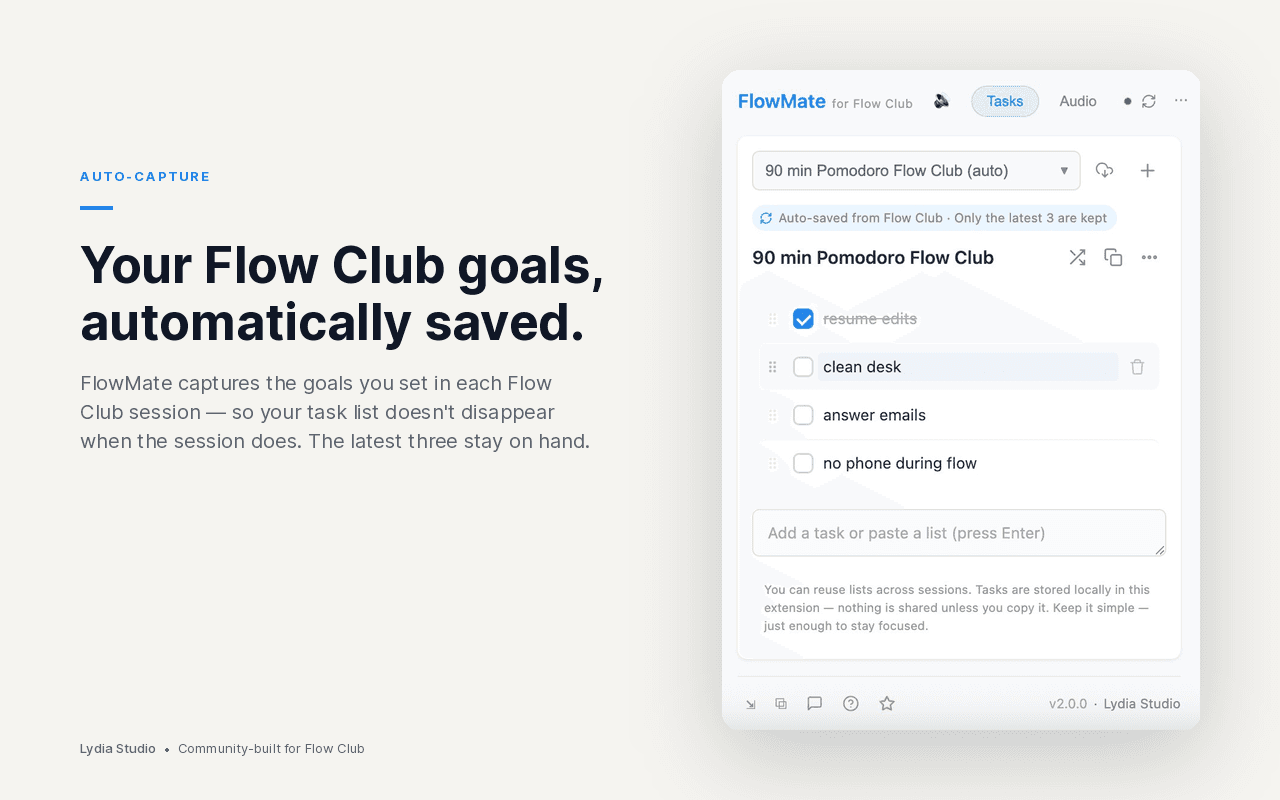
FlowMate
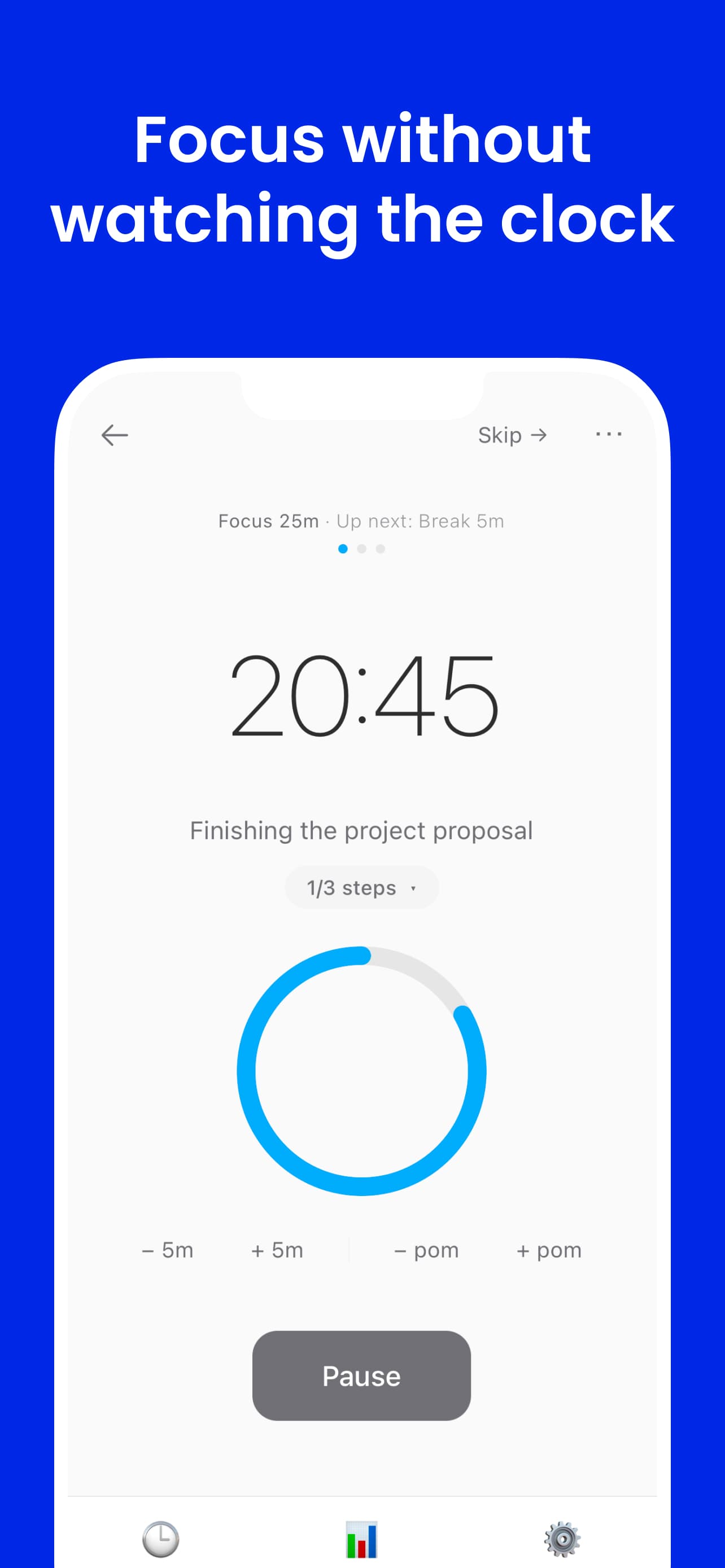
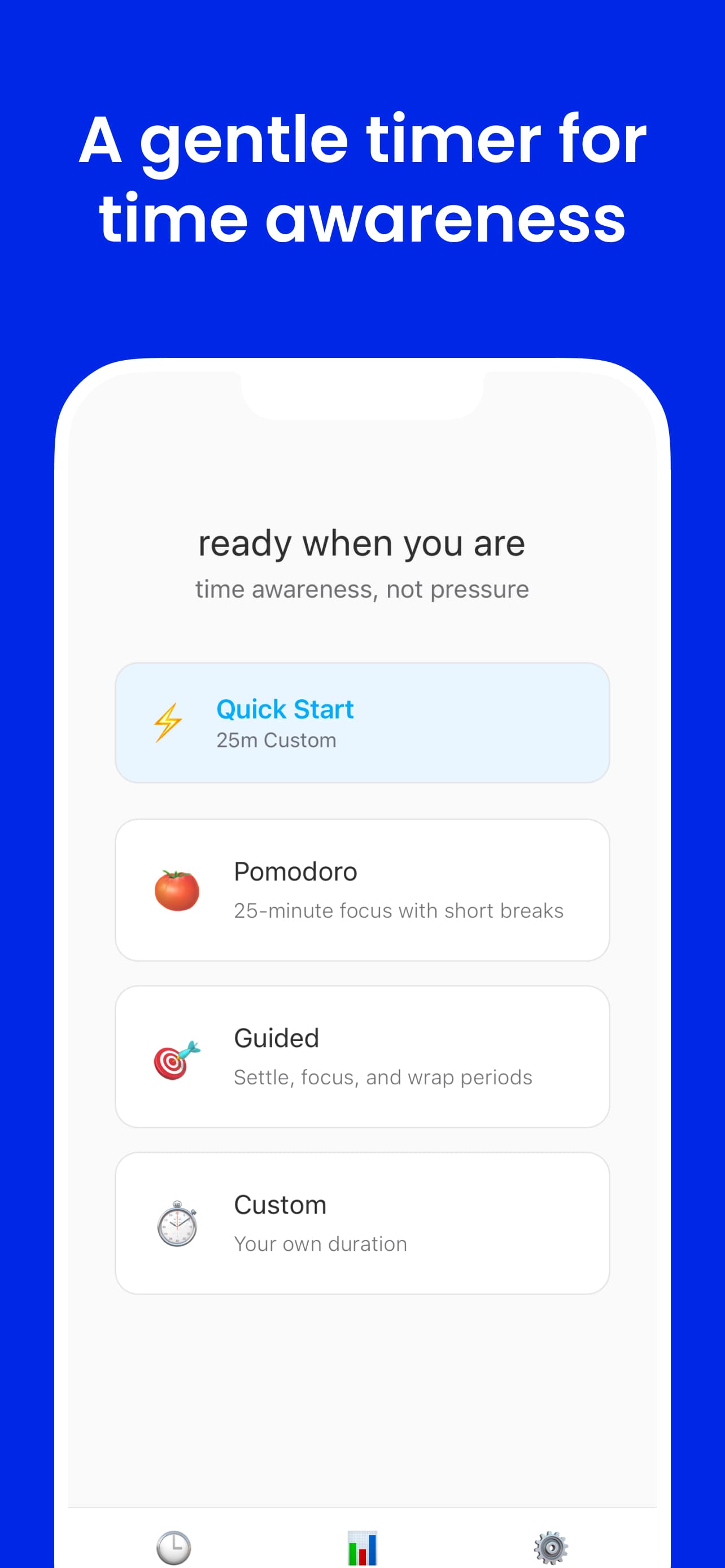
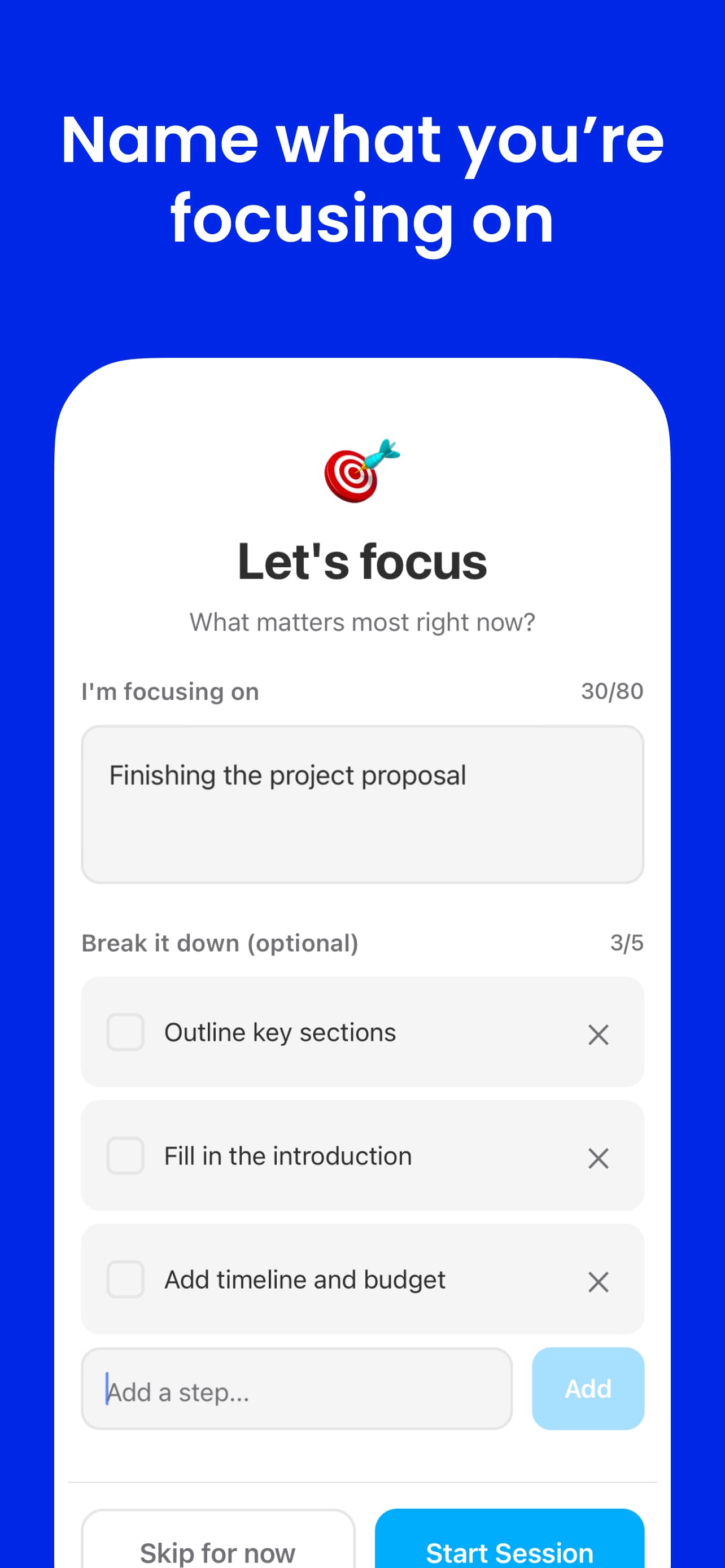
Gentle focus timer with audio cues for non-intrusive time awareness.
Customizable spoken time updates, ambient sounds, and flexible session lengths create supportive structure for focused work. Built on research showing soft audio cues support time awareness without the stress response triggered by sudden alarms.
- • Configurable verbal time announcements
- • Ambient background sounds
- • Flexible session lengths
- • No harsh interruptions

JustToday
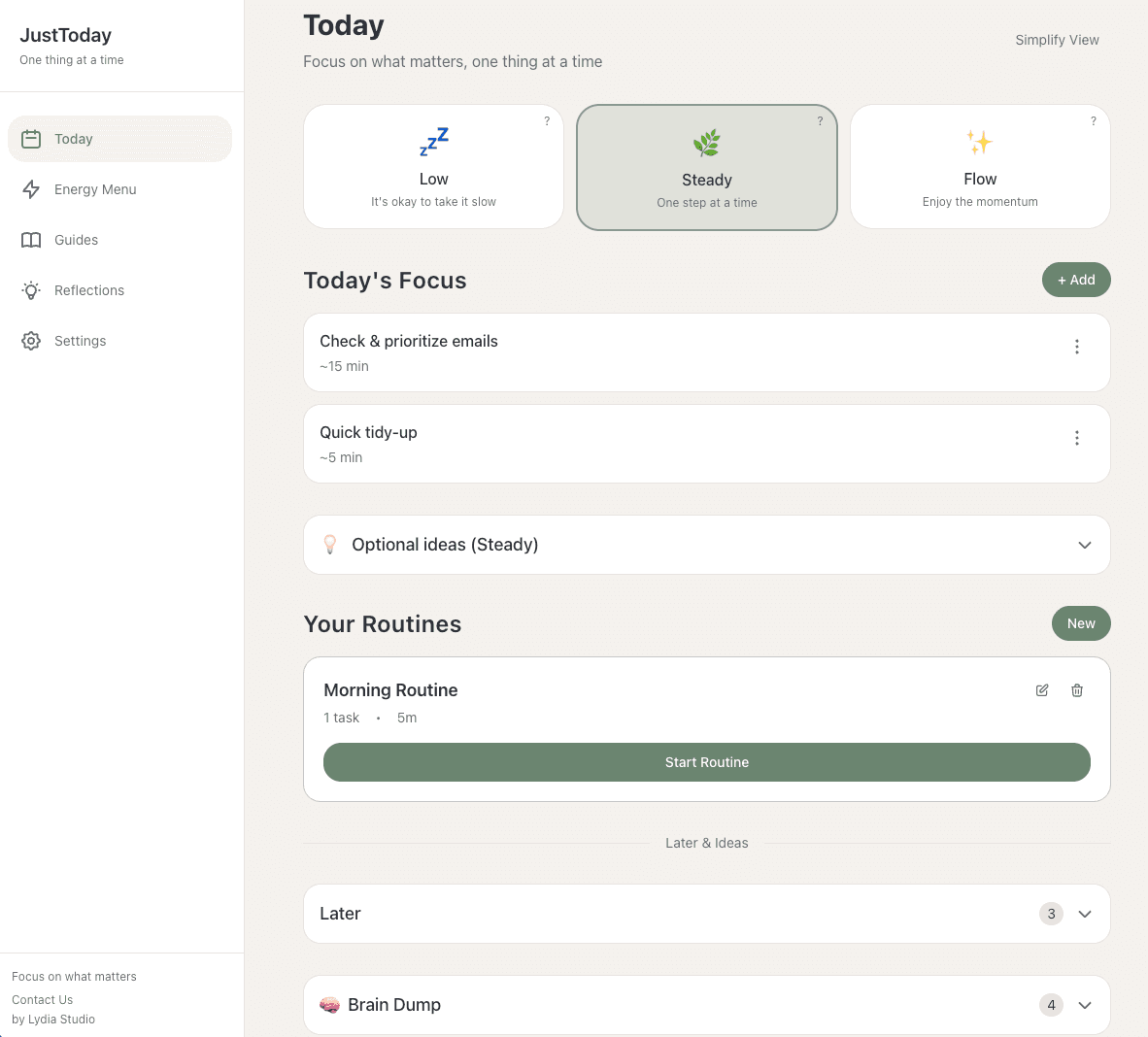
Energy-aware planning tool for realistic daily prioritization. Helps identify what matters today and consciously defer the rest.
In development — feedback welcome
Try it out →
Flow Club Companion
Browser extension enhancing virtual body doubling sessions with time-aware audio cues and reusable task lists.
Featured by Flow Club
Getting started →
Resources Library
Curated collection of evidence-based tools and practices organized by need: focus support, energy management, task initiation.
Community-sourced recommendations
Explore library →About
Building better systems
These tools emerge from years of researching what actually helps when mainstream productivity advice falls short. The work combines direct user research, evidence-based design drawing from cognitive psychology and accessibility principles, rapid iteration, and community feedback.
If you've experienced the gap between how productivity tools expect you to work and how you actually function best, you understand the problem this work addresses.
The solution isn't changing yourself to fit rigid systems. It's building better systems.